Heat stress is the silent killer of broiler farms across sub-Saharan Africa. When ambient temperature exceeds 32C with humidity above 60%, broilers enter physiological crisis: they stop eating, pant excessively, drink 2-3 times their normal water intake, and begin dying. In Cameroon alone, an estimated 15-20% of all broiler mortality during the dry season (November-March) is directly attributable to heat stress. A farmer with 500 birds can lose 50-100 birds in a single heat wave - that is 150,000 to 300,000 FCFA (~$500) gone in 48 hours.
The Temperature-Humidity Index (THI) is your early warning system. THI combines temperature and humidity into a single number that tells you exactly when your birds are in danger. The formula is: THI = T - (0.55 - 0.0055 x RH) x (T - 14.5), where T is temperature in Celsius and RH is relative humidity in percent. THI below 27 = safe. THI 27-30 = caution (watch for reduced feed intake). THI above 30 = danger (immediate action required). FarmWise automatically calculates this for your exact location and warns you on the dashboard.
1. Maximize ventilation before the heat hits
Do not wait until birds are panting. At the first sign of temperatures climbing above 28C, open all sidewall curtains to their maximum. If you use tunnel ventilation fans, run them 24/7 during heat waves. The goal is air movement at bird-body level, not just at ceiling height. A simple test: hold a feather at bird height. If it does not flutter, your ventilation is insufficient. Many farmers make the mistake of only opening curtains on the windward side - you need cross-ventilation, so open BOTH sides.
If you cannot afford electric fans, construct a simple wind chimney: a tall structure (2-3m) with an opening at the top that creates a pressure differential, pulling hot air up and out of the house. This is an ancient African architectural technique that costs nothing but works remarkably well.
2. Electrolytes and vitamin C in drinking water
During heat stress, birds lose massive amounts of electrolytes (sodium, potassium, chloride) through excessive urination and panting. Mix 1 sachet of vitamin C + electrolytes per 200 liters of drinking water. Vitamin C at 200mg per liter has been shown to reduce heat-stress mortality by up to 30% in broiler studies. Change the medicated water twice daily - vitamins degrade quickly in warm water. Start the electrolyte treatment 24 hours BEFORE a forecasted heat wave, not after birds are already stressed.
For farms without access to commercial electrolyte sachets, a homemade alternative: 1 tablespoon salt + 2 tablespoons sugar per 5 liters of water. This is not as effective as commercial products but provides basic electrolyte replacement in an emergency.
3. Shift feeding to the coolest hours
Broilers generate significant body heat during digestion. Feed them during the coolest parts of the day: 5-7 AM (60% of daily ration) and 8-10 PM (25% of daily ration). Remove feeders entirely between 11 AM and 4 PM when heat peaks. Birds will not eat during peak heat no matter what you do - leaving feed out only attracts flies and encourages mold growth. The remaining 15% can be given at 6 PM as the house begins to cool.
This schedule aligns with FarmWise's automatic feed calculation, which splits daily rations 65% morning / 35% evening for poultry. The morning portion is intentionally larger because that is when birds are hungriest and temperatures are lowest.
4. Reduce stocking density by 25%
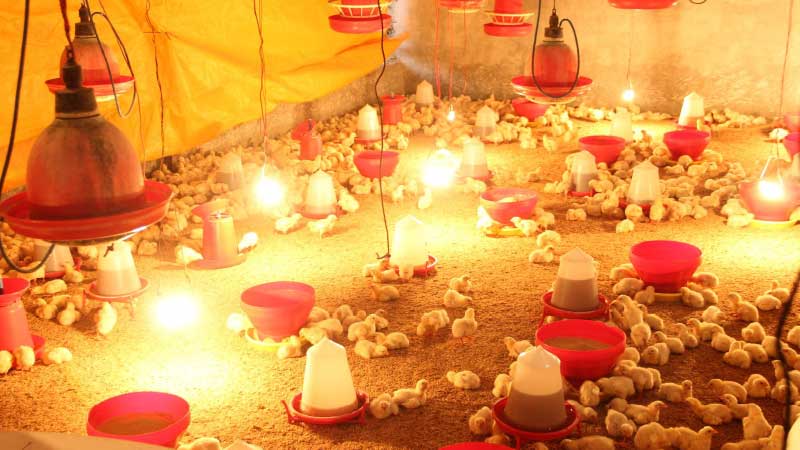
Standard broiler stocking density in Africa is 18-20 birds per square meter. During the hot season, reduce this to 14-15 birds/m2. Birds need space to spread their wings and dissipate body heat through their combs and wattles (the only body parts without feathers). If you have 500 birds in 25 m2, move 125 birds to another section or sell them early at a slightly lower weight. The alternative is losing them to heat stress - which is a 100% loss.
5. Wet feeding as emergency intervention
When birds refuse dry feed entirely (usually at THI above 32), mix feed with cool water at a 1:0.5 ratio (1 kg feed to 0.5 liter water). This increases feed intake by 15-20% during heat stress because the moisture helps birds thermoregulate. However, wet feed spoils rapidly - within 4 hours in tropical temperatures. You must prepare fresh batches every 4 hours and clean feeders between batches to prevent mold. This is labor-intensive but can be the difference between saving a batch and losing it entirely.
6. Water line vigilance
A blocked nipple drinker during a heat wave means dead birds within 3-4 hours. Walk the entire house every 2 hours during heat stress periods and activate each nipple line to verify flow. Check water temperature - if the water in the lines exceeds 28C, birds will not drink it. Run fresh water through the lines in the early morning to fill them with cool water before the heat builds. If possible, paint water storage tanks white to reflect sunlight and keep the water cooler.
7. Monitor mortality with precision
Normal broiler mortality is 0.1% per day (1 bird per 1000 per day). During heat stress, this can spike to 0.5% or even 1%. If you lose more than 1% of your flock in a single day, you are in crisis mode. Emergency measures: sprinkle the roof with water (evaporative cooling can drop internal temperature by 3-5C), place frozen water bottles inside the house, or move birds to a shaded outdoor area if the house is unbearable.
Record every mortality with the date, time, and suspected cause. This data is invaluable for insurance claims and for identifying patterns. FarmWise tracks daily and cumulative mortality per batch and alerts you when you cross the warning threshold (0.3% daily) or critical threshold (0.5% daily).
Sources & References
- [1] Cameroon broiler retail prices: 4,000-12,000 FCFA per bird (small to large/reformé), per Cameroon Tribune June 2025 and cameroun24.net market reports. Source: https://www.cameroon-tribune.cm
- [2] Temperature-Humidity Index (THI) formula and thresholds per FAO Poultry Production in Hot Climates Guidelines. Source: https://www.fao.org
- [3] Vitamin C at 200mg/L reducing heat-stress mortality by up to 30% per peer-reviewed broiler studies (PMC academic literature). Source: https://pmc.ncbi.nlm.nih.gov
FarmWise tracks all of this automatically for your farm.
Start free