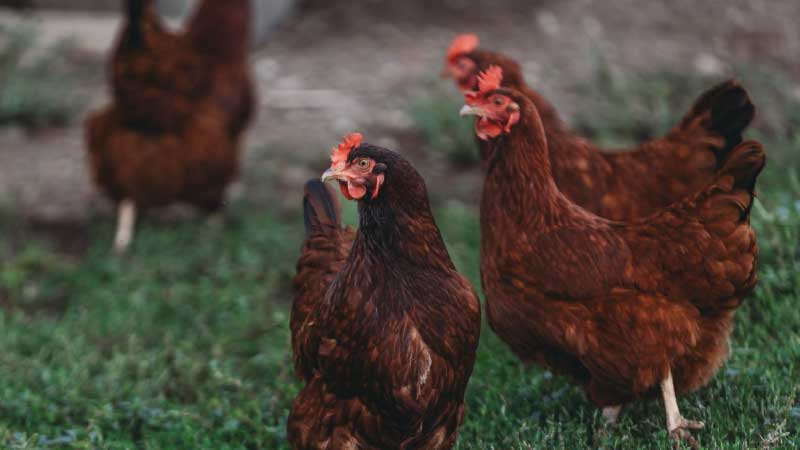
Most African layer farmers blame the breed when production drops. "The Bovans are not laying well this season." "The ISA Browns are too old." But the truth is that management accounts for 60% of egg production, while genetics only accounts for 40%. A well-managed flock of local birds will outperform a poorly-managed flock of imported hybrids every single time. Here are 5 changes that cost almost nothing but can transform your flock's productivity within 3 weeks.
1. Maintain exactly 16 hours of light per day
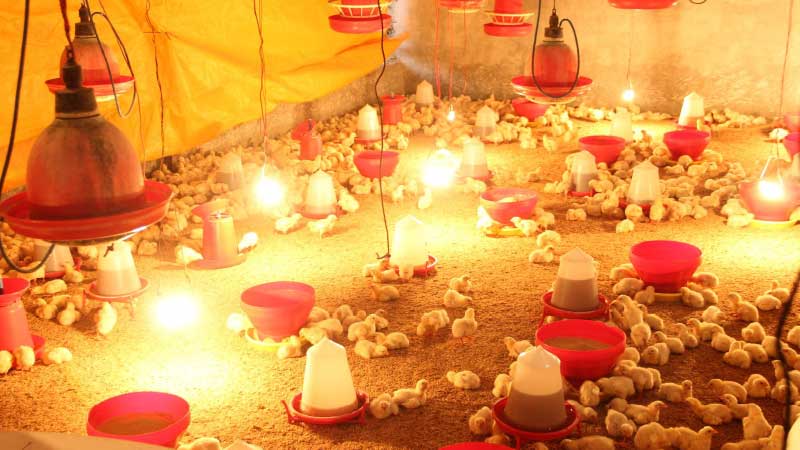
Layers are photoperiodic animals - their reproductive cycle is controlled by the length of daylight. A laying hen needs exactly 16 hours of light per day to maintain peak production. In Cameroon, natural daylight ranges from 11.5 to 12.5 hours depending on the season. That means you need 3.5 to 4.5 hours of supplemental artificial light per day.
The most common mistake is adding light in the evening (after sunset). This is wrong because it extends the day beyond the bird's natural rhythm and can trigger molting. Instead, add light in the MORNING. Turn lights on at 4:30 AM and let natural daylight take over at 6:00 AM. Use a simple timer plug (cost: 3,000 FCFA (~$5.00)) so you do not have to wake up yourself.
The light intensity must be adequate: 40 watts per 15 square meters of floor space. Use warm-white LED bulbs (they are cheaper to run than incandescent and last longer). A common mistake is using too-dim lights - if you can read a newspaper comfortably at bird level, the light is sufficient. If you cannot, the bulb is too weak or too far.
Never reduce the photoperiod once layers are in production. Even one night without lights can cause a 10-15% production drop that takes 2-3 weeks to recover. Consistency is everything.
2. Provide 3.5% calcium in the diet - in a separate feeder
An eggshell is 95% calcium carbonate. A laying hen in peak production needs 4-5 grams of calcium per day just for eggshell formation. If her feed only contains 1% calcium (as most commercial grower feeds do), she will only get 1.2 grams from eating 120 grams of feed. Where does the remaining 3.8 grams come from? From her own bones.
This leads to osteoporosis (cage fatigue), bone fractures, and eventually death. Many farmers notice their layers dying "for no reason" around 50-60 weeks of age. The reason is usually calcium depletion over months of inadequate nutrition.
The solution is simple: provide a separate feeder filled with oyster shell grit or crushed limestone. Birds will eat exactly what they need - they self-regulate calcium intake based on their individual needs. A 50kg bag of oyster shell costs about 8,000 FCFA (~$13.3) and lasts a flock of 200 birds for approximately 3 months. That is an investment of 13 FCFA per bird per month - almost nothing compared to the cost of losing birds.
The calcium source must be in a SEPARATE feeder, not mixed into the feed. If you mix it into the feed, birds will either eat too much (causing kidney damage) or too little (causing thin shells). In a separate feeder, each bird self-regulates her intake. Provide the calcium feeder from the first day of lay (approximately 18 weeks of age) and keep it filled continuously.
3. Collect eggs 3 times per day - no exceptions
Eggs left in the nest for more than 4 hours cause three problems: (1) they get dirty from fecal material and broken shells, reducing their market value; (2) they attract egg-eating behavior from the hens themselves, which is a vice that spreads through the flock like wildfire and is nearly impossible to eradicate once established; and (3) in hot climates, the embryo in a fertile egg begins to develop, reducing egg quality.
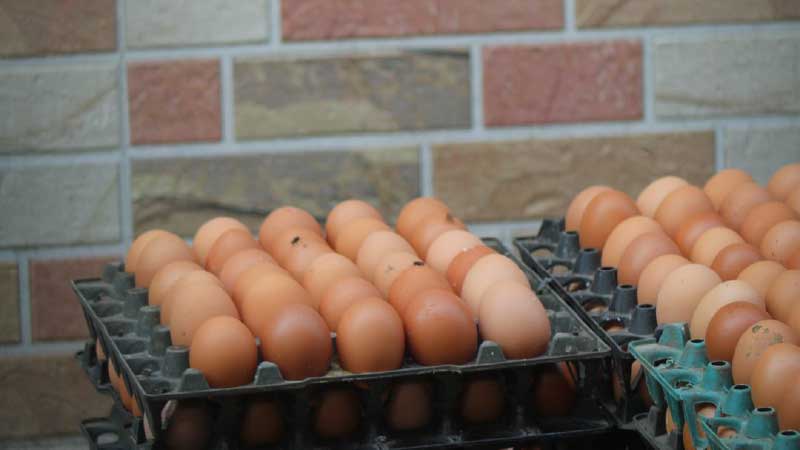
The collection schedule should be: 8:00 AM (after the morning laying peak, which occurs between 6-9 AM), 12:00 PM, and 4:00 PM. Three collections per day eliminates 95% of egg quality problems. Train your workers to collect gently - cracked eggs during collection are a hidden loss that adds up to 2-3% of total production over a laying cycle.
4. Keep drinking water below 25C
This is the most overlooked production factor in tropical layer farming. Layers will not drink warm water. When water temperature exceeds 25C, water consumption drops by 30% and egg production drops by 10% within 48 hours. The birds do not look sick - they just lay fewer eggs. Many farmers never connect the production drop to the water temperature because they never measure it.
Practical solutions: (a) Place waterers in the shade, never in direct sunlight. (b) Change water 3 times per day during the dry season (6 AM, 12 PM, 4 PM) with fresh, cool water from a storage tank kept in a shaded area. (c) Paint water storage tanks white to reflect sunlight. (d) If possible, bury the water supply pipe 30cm underground - soil temperature at that depth is typically 22-24C year-round in Cameroon. (e) Use nipple drinkers instead of open troughs - nipple systems keep water cooler because it is not exposed to air and sunlight.
5. Cull underperformers at 40 weeks
By 40 weeks of age, you can identify which birds are laying and which are not. A flock of 500 layers typically has 50-75 non-layers (10-15%) that are consuming feed worth 25,000 FCFA (~$41.7) per month without producing any eggs. These birds are parasites on your flock's profitability.
Signs of a non-layer (check these in the evening when birds are calm):
- Pale, shriveled comb and wattles: A laying hen has a bright red, full comb. A non-layer has a pale, small comb because reproductive hormones are not flowing.
- Narrow, hard pelvis: Place your fingers between the pelvic bones (pin bones). In a layer, 3-4 fingers fit comfortably. In a non-layer, only 1-2 fingers fit.
- Dry, pale vent: A laying hen has a moist, oval vent. A non-layer has a dry, round, pale vent.
- Small, hard abdomen: A layer has a soft, enlarged abdomen (the reproductive organs are active). A non-layer has a firm, small abdomen.
Cull these birds. The remaining flock will have more feeder space, more waterer space, and less competition. Overall flock production often INCREASES after culling, even with fewer birds. A flock of 425 well-managed layers will produce more eggs than 500 layers where 75 are non-productive.
FarmWise tracks daily egg production per batch and compares it to the standard Lohmann Brown / Hy-Line Brown curves. If your flock falls below 80% of standard, you get an automatic warning on your dashboard. The app also calculates your production rate (eggs per bird per day) and tracks it over time, so you can see exactly when production starts to decline and take action.
Sources & References
- [1] Cameroon egg tray (30) retail price: 1,900-2,100 FCFA (government-set, Oct 2023, foodbusinessmea.com); market prices observed at 2,200-2,400 FCFA (Cameroon Tribune). Source: https://www.foodbusinessmea.com
- [2] Layer photoperiod 16 hours light per day per universal poultry science standards and FAO Layer Production Guidelines. Source: https://www.fao.org
- [3] Laying hen calcium requirement 4-5 grams/day for eggshell formation, per Ross and Cobb breeder management guides. Source: https://www.faocodealimentarius.org
FarmWise tracks all of this automatically for your farm.
Start free