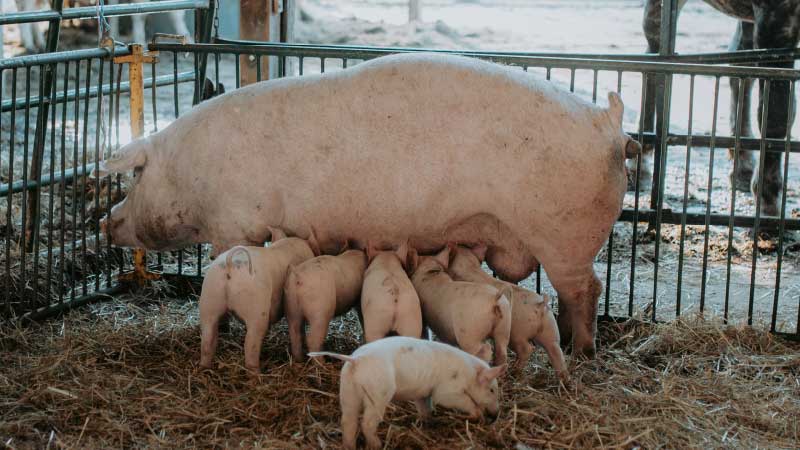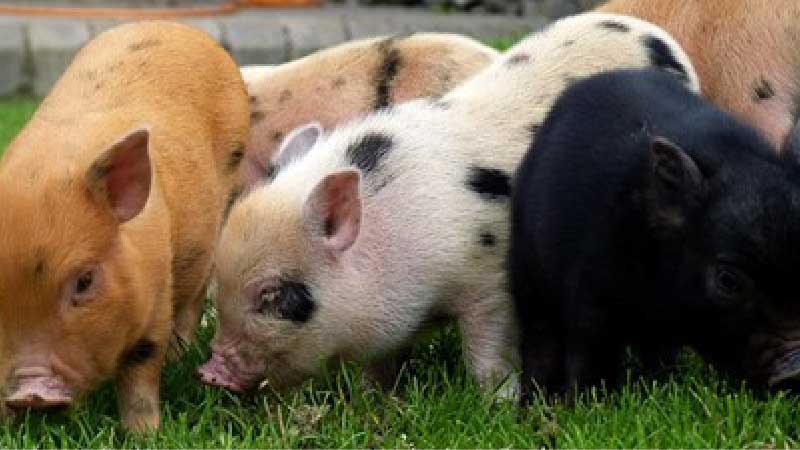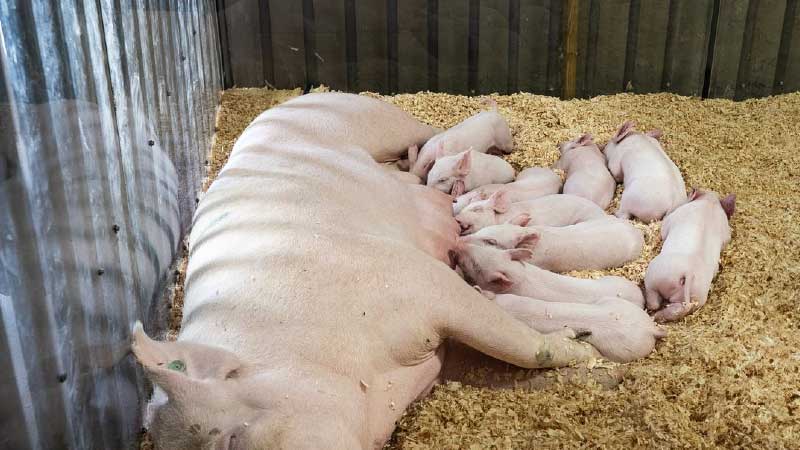
The period immediately after farrowing is the highest-risk window in pig production. The sow has just undergone the metabolic equivalent of running a marathon - 2-6 hours of intense labor, loss of 1-3 liters of fluid, and now must produce 2-4 liters of milk per day for a litter of 8-12 hungry piglets. Get the post-farrowing care right and the litter thrives; get it wrong and you lose piglets to chilling, starvation, crushing, and disease within the first 72 hours. This article is the complete protocol for post-farrowing sow care.
The first 4 hours: immediate post-farrowing checks
As soon as the last piglet is born (which you confirm by the sow relaxing, settling onto her side, and the afterbirth passing), do these checks:
- Count piglets. Total born, number alive, number dead, number mummified. Record immediately - this is your baseline.
- Check each piglet. Clear mucus from mouth and nose. Dry with a clean cloth or paper towel (wet piglets lose heat 25x faster than dry). Apply iodine (7%) to the navel stump to prevent infection. Place at the sow's teats to drink colostrum within 30 minutes of birth.
- Check the sow. Has she passed the afterbirth? (Should be 1-2 reddish-brown masses, 200-500g total). If not passed within 4 hours of the last piglet, call the vet - retained afterbirth can kill her. Is she alert, or lethargic? Is she running a fever? (Normal sow temp is 38.5-39.5C - check with rectal thermometer if she seems off).
- Provide warm water to the sow. A 2-3 liter drink of warm water with a tablespoon of sugar and pinch of salt immediately after farrowing helps replenish fluids and encourages her to eat. Do NOT give cold water - it can cause uterine cramping.
- Strip the front teats. Manually express a few drops of milk from each of the front 2-3 teats to confirm colostrum is flowing. If no colostrum within 2 hours of the first piglet, intervene - see the section on stimulating milk letdown below.
The colostrum window: 6 hours is critical
Piglets are born with essentially no immune system. They get their antibodies from colostrum - the first milk, thick and yellowish, produced in the first 24 hours after farrowing. The piglet's gut can absorb these large antibody molecules only in the first 6 hours of life; by 24 hours, the gut "closes" and can no longer absorb antibodies intact. After that, even if the piglet drinks colostrum, it gets nutrition but no immune protection.
Practical implication: every piglet must drink colostrum within the first 6 hours. Weak piglets, small piglets, and piglets from large litters (where competition is fierce) often miss out. Management intervention:
- Sort piglets by size. Put the 3-4 smallest piglets on the front teats (which produce the most colostrum) for the first 6 hours, then rotate them.
- If a piglet is too weak to suckle, tube-feed 20-30ml of warmed colostrum (milked from the sow or from a frozen reserve) directly into the stomach using a soft feeding tube.
- If the sow has no colostrum (rare but happens with first-litter gilts or sows with mastitis), use cow colostrum (warmed to body temperature) or commercial colostrum replacer.
Day 1-3: the critical survival window
Piglet mortality is concentrated in the first 3 days. The 4 causes, in order: (1) crushing by the sow, (2) starvation/hypothermia, (3) diarrhea, (4) congenital defects. Each is preventable with the right management:
Preventing crushing
Sows typically crush 1-3 piglets per litter by lying on them. Prevention:
- Farrowing crate or creep area: the sow is confined in a crate that allows her to lie down but prevents her from rolling onto piglets. Piglets have a separate "creep area" with a heat lamp where they sleep - the warmth attracts them away from the sow's body. Cost of a farrowing crate: 150,000-300,000 FCFA (~$500). Pays for itself in 2 litters through saved piglets.
- If no crate: provide a creep corner with a 150-watt heat lamp 50cm above the floor (target: 32-35C at piglet level). Piglets prefer 35C warmth to the sow's body, so they sleep in the creep area rather than next to the sow where they get crushed.
- Watch the sow for the first 48 hours. Stay nearby when she stands up or lies down - these are the moments when crushing happens. Quietly move sleeping piglets away from where she is about to lie.
Preventing hypothermia
Newborn piglets have almost no body fat and cannot regulate their own temperature. They need an environmental temperature of 32-35C for the first week, dropping 2C per week. Hypothermia kills piglets directly (they freeze to death) and indirectly (cold piglets do not suckle, get weak, and die of starvation).
Provide heat via: 150-watt infrared heat lamp 50cm above the floor (best), or simple 100-watt incandescent bulb (acceptable), or hot water bottles wrapped in towels in the creep area (emergency only - need refilling every 4 hours).
Iron injection
Piglets are born with only 50mg of iron in their body but need 200mg in the first 2 weeks to support rapid blood cell production. Sow milk contains almost no iron. Without supplementation, piglets develop anemia within 2 weeks - pale skin, weakness, poor growth, increased mortality.
Standard treatment: intramuscular injection of 1ml of iron dextran (150mg iron/ml) into the neck muscle at day 2-3. Cost: ~100 FCFA (~$0.17) per piglet. This single injection prevents anemia and is one of the highest-ROI interventions in pig farming.
Sow feeding in the first 3 days
Day 1 (within 12 hours of farrowing): offer 1-2kg of wet feed (lactation mash mixed with warm water to a soupy consistency). Add a handful of wheat bran or psyllium husk to prevent constipation (a common problem after farrowing that causes toxemia and reduced milk production).
Day 2: 2-3kg of wet feed, divided into 2-3 meals.
Day 3: 3-4kg of wet feed, divided into 3 meals. By now her appetite should be returning to normal.
Do NOT feed full ration in the first 24 hours - overfeeding causes mastitis (udder infection) and reduces milk production. Build up gradually over 5-7 days to the full lactation ration of 5-7kg/day (depending on litter size).
The full lactation ration (day 4+ to weaning)
A sow nursing 10 piglets produces 6-8 liters of milk per day. This requires 5-7kg of high-quality lactation feed per day. Feed ad libitum (free choice) starting day 5 if she has recovered well.
Lactation feed should contain:
- 17-19% crude protein (higher than gestation feed)
- 3,300-3,400 kcal ME/kg (higher energy)
- 0.9-1.0% lysine (key amino acid for milk production)
- 0.85% calcium and 0.65% phosphorus (for milk mineral content)
- Adequate water: 20-30 liters per day for a lactating sow (twice her non-lactating intake)
A simple lactation mash: 60% maize, 20% soya meal, 10% wheat bran, 5% fish meal, 3% oyster shell, 1% salt, 1% lactation premix. Cost ~280 FCFA (~$0.47)/kg. At 6kg/day = 1,680 FCFA (~$2.80) per day in feed for the sow. This investment produces 10 piglets gaining 200g/day each = 2kg of piglet weight per day, worth about 1,500 FCFA (~$2.50) in slaughter value. Feed costs are 70-80% of piglet production cost - this is why feed efficiency matters so much.
Water: the most overlooked input
A lactating sow drinks 20-30 liters of water per day. Without enough water, milk production drops within hours. Provide:
- Clean, fresh water at all times - check the drinker 3-4 times per day for blockages.
- Water flow rate: 1-2 liters per minute from nipple drinkers. Slower flow = sow gives up and drinks less.
- Water temperature: 15-22C is ideal. Do not let water sit in tanks in the sun where it warms above 30C - the sow will not drink enough.
- Add electrolytes to the water during the first 48 hours post-farrowing to help her recover fluid balance.
Health checks: what to look for daily
For the first 7 days, inspect the sow twice daily for:
- Mastitis: hot, swollen, painful udder. The sow refuses to let piglets nurse. Treat immediately with antibiotics (penicillin or oxytetracycline) and anti-inflammatory. Piglets will need supplemental milk replacer until she recovers.
- Metritis (uterine infection): foul-smelling discharge from the vulva, fever, loss of appetite. Treat with prostaglandins and antibiotics - vet intervention required.
- Constipation: no feces for 24+ hours. Treat with wet feed, wheat bran, or a laxative (Epsom salts 30g in feed).
- Reduced milk production: piglets are restless, losing weight, vocalizing. Check the udder - if soft and empty, milk letdown has failed. See below for stimulation techniques.
- Fever: above 39.5C is abnormal. Above 40C is an emergency. Call the vet.
Stimulating milk letdown when it fails
Sometimes a sow fails to produce or let down milk, especially first-litter gilts. Causes: stress, malnutrition, mastitis, or oxytocin deficiency. Interventions in order of escalation:
- Quiet environment. Remove all stress (loud noises, dogs, strangers). A stressed sow releases adrenaline, which blocks oxytocin and stops milk letdown.
- Warm massage. Apply a warm wet towel to the udder for 10 minutes, massaging gently. This stimulates oxytocin release and milk flow.
- Encourage piglet suckling. Place the smallest piglets on the front teats and hold them there until you see them actively swallowing. The suckling itself triggers oxytocin.
- Oxytocin injection. If milk is present but not letting down (you can feel a full udder but piglets get nothing), inject 10-20 IU of oxytocin intramuscularly. Effect within 5-10 minutes. Cost: ~500 FCFA (~$0.83) per dose. Use only under veterinary guidance.
- Piglet supplementation. If milk production is genuinely low (not just letdown), provide commercial piglet milk replacer in shallow trays every 4-6 hours. Cost: 2,500-3,500 FCFA (~$5.83) per kg, fed at 20ml per piglet per feed. This is essential to save the litter.
The 5 things farmers do that kill piglets
- No heat lamp / creep area. Piglets freeze to death or sleep next to the sow and get crushed.
- No iron injection. Piglets develop anemia by day 10, become weak, and die or fail to thrive.
- Overfeeding the sow on day 1. Causes mastitis, milk production crashes, piglets starve.
- Not providing enough water to the sow. Milk production drops, piglets starve.
- Cross-fostering too late. If a litter is too large for one sow (14+ piglets), move 2-3 piglets to another sow with a smaller litter within 24 hours of birth. After 48 hours, the foster sow will often reject them. Cross-fostering saves both over-large litters (where the smallest piglets starve) and under-large litters (where the sow produces milk for 12 but only 6 piglets drink it, causing mastitis).
Weaning preparation (day 21-28)
At day 21-28, piglets are ready to wean. To prepare both sow and piglets:
- Introduce creep feed (highly palatable starter feed) at day 10-14. Piglets learn to eat solid food before weaning, which dramatically reduces weaning stress.
- Reduce the sow's feed by 30% in the 3 days before weaning to start drying up her milk.
- Separate sow from piglets on weaning day. Keep piglets in the same pen (familiar environment) and move the sow - not the other way around. Reduces stress.
- Watch the weaned sow for 5-7 days for post-weaning complications (mastitis from milk not drying up, estrus returning within 5-7 days).
FarmWise tracks every litter: birth date, sow ID, piglets born alive, piglets weaned, weaning weight, daily gain. This data is the foundation of breeding decisions - it tells you which sows to keep, which to cull, and which boars produce the best offspring. Without this data, you are flying blind; with it, your herd improves with every generation.
Sources & References
- [1] Pig gestation period 114 days (3 months, 3 weeks, 3 days): universal veterinary standard, per FAO Pig Production Guidelines. Source: https://www.fao.org
- [2] Colostrum absorption window (first 6 hours of life) per veterinary immunology literature and OIE standards. Source: https://www.woah.org
- [3] Iron dextran injection (1ml, 150mg iron/ml) at day 2-3 to prevent neonatal anemia: universal pig husbandry standard. Source: https://www.fao.org
FarmWise tracks all of this automatically for your farm.
Start free