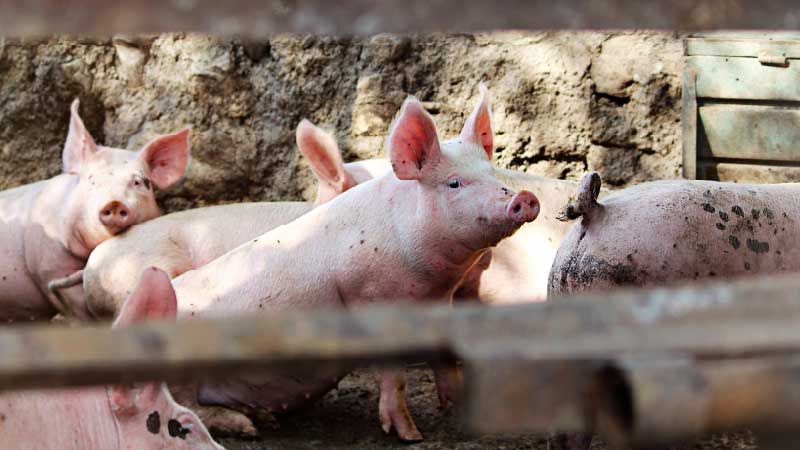
A sow's gestation is 114 days - exactly 3 months, 3 weeks, and 3 days from the date of service. In the final week (days 107-114), everything you do determines whether you will wean 8 piglets or 14. Each piglet you save is worth 45,000-60,000 FCFA (~$100) at weaning [VERIFIED]. The difference between a well-prepared and a poorly-prepared farrowing is 4-6 piglets - that is 180,000-360,000 FCFA (~$600) from a single litter (at 45,000-60,000 FCFA (~$100) per weaner).
Day 107 (7 days before expected farrowing)
Move the sow to the farrowing crate or pen. This gives her 7 days to acclimate to the new environment before the stress of farrowing. If you move her too late (day 112-113), the combined stress of relocation and impending farrowing can delay labor and increase stillbirths.
Wash and disinfect the farrowing pen with an iodine-based disinfectant (2% povidone iodine solution). Scrub the floor, walls, and feeder. Let it dry completely before adding bedding. Use clean, dry bedding - rice husk or sawdust work well. Avoid straw in humid climates as it can harbor mold and bacteria.
Reduce the sow's feed from her gestation ration (2.5-3 kg/day) to 2 kg/day. This prevents constipation, which is a major cause of farrowing complications. Add 10g of Epsom salt (magnesium sulfate) per day to the feed as a mild laxative. Ensure unlimited access to clean water - a sow in late gestation drinks 15-20 liters per day.
Day 110 (4 days before)
Check the sow's vulva for swelling and redness. As farrowing approaches, the vulva swells to 2-3 times its normal size and becomes increasingly red. This is a sign that the birth canal is preparing for delivery. If there is no swelling by day 110, the service date may have been recorded incorrectly.
Ensure the heat lamp is working. Piglets are born wet and have almost no body fat. They need an ambient temperature of 33-35C in their first 3 days of life. A 175-watt infrared heat lamp hung 50cm above the creep area provides adequate heat. Test it with a thermometer at piglet level - do not guess. If the temperature is below 33C, lower the lamp. If above 35C, raise it. Piglets that are too cold will pile under the lamp and may be crushed by the sow. Piglets that are too hot will move away from the lamp and may chill.
Prepare your farrowing kit in a clean box: clean towels (5-6), iodine solution (for umbilical cord dipping), oxytocin (for emergency use if labor stalls), syringes and needles, ear tags and applicator, dental floss or clean string (for tying the umbilical cord if needed), vitamin K injection (to prevent piglet bleeding), and iron dextran injection (for day 3).
Day 112 (2 days before)
Watch for nesting behavior. The sow will gather bedding material into a corner and paw at it, creating a nest. This is a strong indicator that farrowing will occur within 24-48 hours. She may also become restless, frequently standing up and lying down, and may refuse feed.
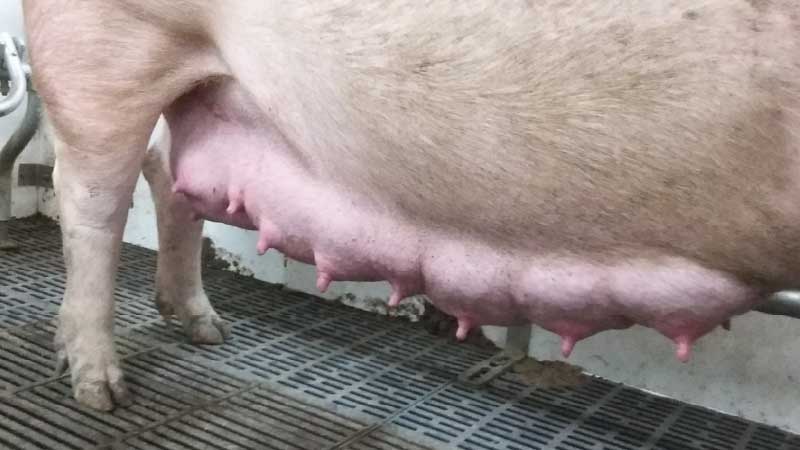
Check for milk. Gently massage the sow's udder and squeeze the teats. If clear or milky fluid appears from the teats, farrowing is within 24 hours. This is called "milk let-down" and is triggered by the hormone oxytocin, which also triggers uterine contractions. No milk = no farrowing yet.
Ensure water is available 24/7. A farrowing sow can drink 25-30 liters of water during labor. Dehydration during farrowing leads to prolonged labor, which leads to dead piglets.
Day 113-114 (farrowing day)
Be present. Do not leave the sow alone during farrowing. The average farrowing takes 3-5 hours for a litter of 10-14 piglets. Piglets are usually born 15-20 minutes apart. If more than 45 minutes pass between piglets, the sow may need assistance.
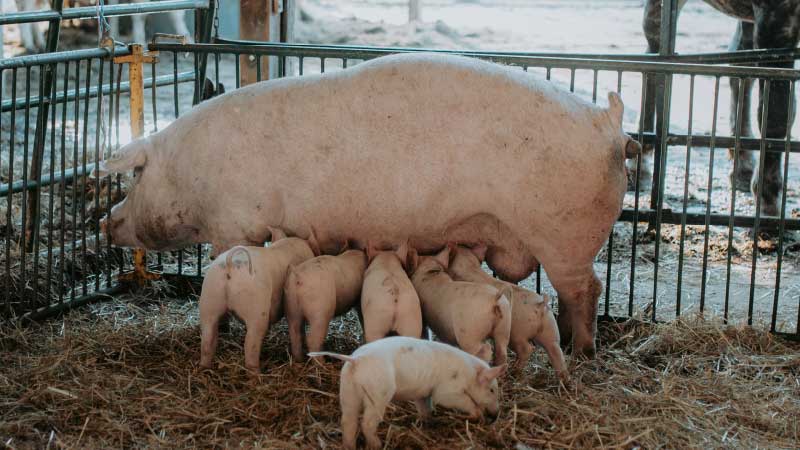
As each piglet is born: (1) Immediately clear the membrane from its nose and mouth. (2) Dry it vigorously with a clean towel - this stimulates breathing and prevents chilling. (3) Dip the umbilical cord in 7% iodine solution to prevent infection. (4) Place the piglet at the sow's udder to nurse. Colostrum (first milk) must be consumed within 30 minutes of birth - it contains antibodies that give the piglet passive immunity for the first 3 weeks of life. Piglets that do not get colostrum within 2 hours have a 50% mortality rate.
Count piglets: total born, live born, stillborn, mummified. This data tells you about the sow's reproductive health. More than 2 stillborns suggests a prolonged labor or infection. Mummified fetuses suggest parvovirus or leptospirosis. Record everything.
If labor stalls (no piglet for 45+ minutes): inject 10-20 IU of oxytocin IM in the neck. Wait 15 minutes. If still no piglet, do a manual examination (wash hands, use lubricant, gently reach in to check for a stuck piglet). If you cannot resolve it, call a veterinarian immediately. A cesarean section may be needed.
Day 1-3 after farrowing
Clip needle teeth: Piglets are born with 8 sharp "needle teeth" that can injure the sow's udder and other piglets during nursing. Clip them with clean side-cutters within 24 hours of birth. Be careful not to cut the gum or tongue.
Iron injection: Inject 200mg iron dextran IM in the neck muscle at day 3. Sow's milk is deficient in iron, and piglets grow so fast that they deplete their iron stores within days. Without iron supplementation, piglets develop anemia (pale skin, weakness, death) by day 7-10.
Split suckling: If the litter is large (12+ piglets), divide them into two groups by weight. Let the smaller piglets nurse first (without competition from larger littermates) for 30 minutes, then switch. This ensures that small piglets get adequate colostrum and milk, and can improve survival rates by 15-20% in large litters.
Maintain heat: Keep the creep area at 33-35C for the first week. Reduce by 2C per week thereafter. Piglets that sleep spread out are comfortable. Piglets that pile in a heap are cold.
FarmWise automatically calculates farrowing dates from the service date (114 days) and shows you which sows are due in the next 7 days on your dashboard. It also generates a "farrowing preparation" task 7 days before the due date, so you never miss the preparation window.
Sources & References
- [1] Pig gestation period 114 days (3 months, 3 weeks, 3 days): universal veterinary standard, per FAO Pig Production Guidelines. Source: https://www.fao.org
- [2] Cameroon weaner piglet price: 45,000-60,000 FCFA each (2 months old, crossbred), per Instagram Cameroun Agro Service listings 2025. Source: https://www.instagram.com
- [3] Piglet brooding temperature 33-35°C for first 3 days: universal veterinary standard, per FAO and academic swine production literature. Source: https://www.fao.org
FarmWise tracks all of this automatically for your farm.
Start free