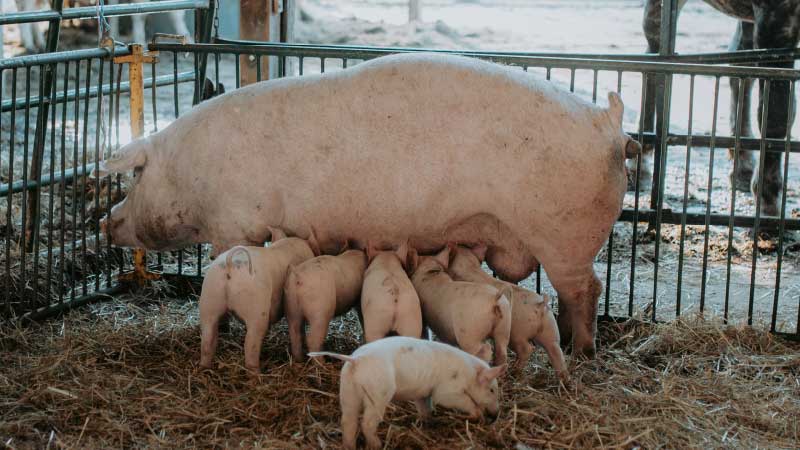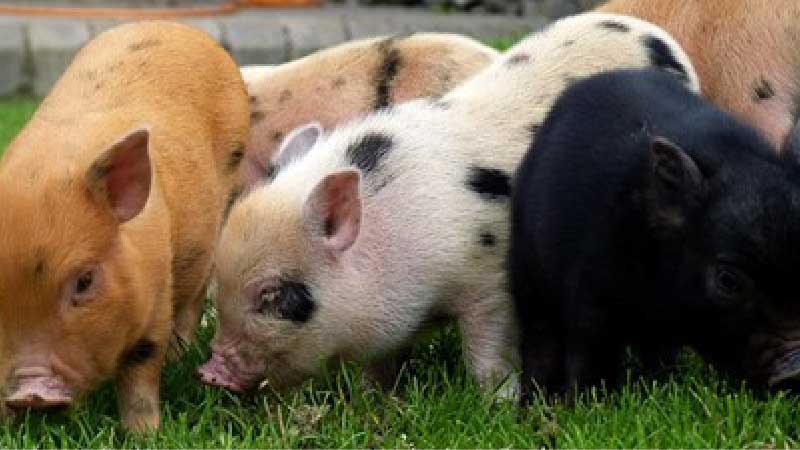
Iron deficiency is the #1 nutritional cause of piglet mortality in the first 3 weeks of life. Piglets are born with only 50mg of iron in their body, but they need 200mg by day 14 to support rapid red blood cell production. Sow milk contains almost no iron. Without supplementation, piglets develop iron deficiency anemia: pale skin, weakness, poor growth, diarrhea, and death. Mortality in untreated piglets can reach 15-20% [1][2].
The solution is simple: one injection of iron dextran at day 3 of life. It costs ~100 FCFA (~$0.17 USD) per piglet and prevents the entire problem. But there is a catch: giving too much iron is just as deadly as giving too little. Iron toxicity kills piglets within 6-12 hours of overdose, and there is no treatment [3][4]. This article covers the correct dose, timing, and the critical warning signs of overdose.
Why piglets need iron supplementation
Piglets are born with very low iron reserves (50mg) because the placenta does not transfer much iron from the sow to the fetus. Sow milk, despite being nutritionally excellent in most respects, contains only 1-2mg of iron per liter — far below the 7-10mg per day that a growing piglet needs [1][2].
Without iron, the piglet cannot produce hemoglobin (the protein in red blood cells that carries oxygen). The result is iron deficiency anemia: the blood cannot carry enough oxygen to the tissues, the piglet becomes weak and pale, growth stops, and the immune system is compromised. Anemic piglets are also more susceptible to diarrhea, pneumonia, and other infections.
The 5 symptoms of iron deficiency anemia
- Pale skin and mucous membranes: The most visible sign. The skin (especially around the eyes, ears, and snout) appears white or grayish instead of pink. The gums, inner eyelids, and vulva (in females) are pale pink or white instead of bright red.
- Weakness and lethargy: The piglet is less active than littermates, sleeps more, and is slow to nurse. When picked up, it feels "floppy" instead of firm and active.
- Poor growth: Affected piglets fall behind their littermates in weight. By 2-3 weeks, they may be 30-50% smaller than healthy littermates [1].
- Diarrhea: Anemic piglets are more susceptible to E. coli and other gut infections, which cause diarrhea. The diarrhea further depletes nutrients and worsens the anemia.
- Increased mortality: Without treatment, 15-20% of anemic piglets die, usually from secondary infections or heart failure due to lack of oxygen [1][2].
When symptoms appear: Iron deficiency symptoms typically appear at 10-21 days of age, when the piglet's stored iron has been depleted. By the time symptoms are visible, the piglet is already severely anemic and treatment is urgent.
The correct dose and timing
Dose: 150mg of iron per piglet, given as 1ml of iron dextran solution (150mg iron per ml) [5][6].
Timing: Day 3 of life (72 hours after birth). This is the optimal timing because: (a) the piglet's iron reserves are still adequate at birth but dropping rapidly; (b) by day 7, reserves are critically low; (c) day 3 is early enough to prevent anemia but late enough that the piglet is strong enough to handle the injection [5].
Route: Intramuscular (IM) injection into the neck muscle, behind the ear. Use a 20-gauge needle, 1/2 inch long.
Do NOT give:
- More than 200mg (1.3ml): Higher doses do not improve iron status and increase the risk of toxicity. Studies show no significant difference between 150mg and 200mg doses — 150mg is sufficient [5][6].
- Before day 1: The piglet's liver is not mature enough to process the iron injection at birth. Wait until day 3.
- After day 7: By this time, the piglet may already be anemic. The injection still works but is less effective because the anemia has already impaired growth.
- Multiple injections: ONE injection at day 3 is sufficient for the entire pre-weaning period. Only repeat if the piglet shows signs of anemia at 2-3 weeks — and even then, a second injection of 100mg is enough [5].
The danger of iron overdose (iron toxicosis)
While iron deficiency is common, iron overdose (iron toxicosis) is less common but far more dangerous. Iron toxicity kills piglets within 6-12 hours of overdose, and there is no effective treatment [3][4].
How overdose happens:
- Wrong dose: Giving 3-5ml instead of 1ml (typically due to using the wrong syringe or misreading the label)
- Multiple injections: Giving iron at day 1, then again at day 7, then again at day 14 (totaling 450mg — 3x the safe dose)
- Vitamin E/selenium deficiency: Piglets deficient in vitamin E or selenium are more susceptible to iron toxicity. The iron injection causes oxidative damage that the piglet cannot counter. This is the most insidious cause because the farmer does not know the piglet is deficient [4].
- Dirty injection technique: Bacteria introduced by a dirty needle can cause abscesses at the injection site, which release iron into the bloodstream slowly, causing chronic toxicity.
Symptoms of iron toxicosis (memorize these):
- Sudden lameness: The piglet is unable to walk or stands with difficulty, usually within 6-12 hours of the iron injection [4].
- Dark swelling on the affected muscle: The injection site becomes swollen, hard, and dark purple/black due to muscle necrosis (tissue death).
- Pale/anemic appearance: Paradoxically, iron toxicity can cause anemia because the excess iron damages red blood cells (hemolysis).
- Vomiting and anorexia: The piglet stops eating and may vomit.
- Respiratory distress: Rapid, labored breathing as the body tries to compensate for lack of oxygen.
- Icterus (jaundice): Yellow discoloration of the skin and eyes due to liver damage.
- Neurological signs: Coma, convulsions, death [3].
What to do if you suspect iron overdose:
- There is no specific treatment. Iron toxicity has no antidote. The piglet will either recover on its own (if the dose was only slightly too high) or die (if the dose was significantly too high).
- Supportive care: Keep the piglet warm, hydrated, and quiet. Give electrolytes with glucose orally every 2 hours.
- Vitamin E + selenium injection: If you suspect the overdose was caused by vitamin E deficiency, give 1ml of vitamin E + selenium (E-Sel) IM immediately. This may help counteract the oxidative damage. Costs ~500 FCFA (~$0.83 USD).
- Antibiotics: Give a broad-spectrum antibiotic (Penstrep) IM for 3 days to prevent secondary infection from the tissue damage.
- Do NOT give more iron. This will only make it worse.
- Death usually occurs within 24 hours of the overdose if it is going to occur. If the piglet survives 24-48 hours, it will likely recover, though it may be permanently stunted [3][4].
Prevention of iron toxicity
- Use the correct syringe: A 1ml syringe (not a 5ml syringe) ensures you measure 1ml accurately. Reading 1ml on a 5ml syringe is easy to misread as 2-3ml.
- Read the label: Check the concentration of your iron dextran. Most brands are 150mg/ml, but some are 100mg/ml or 200mg/ml. Adjust the dose accordingly.
- Give only ONE injection at day 3. Do not repeat unless there are clear symptoms of anemia at 2-3 weeks.
- Give the sow vitamin E + selenium in her gestation feed for the last 30 days of pregnancy. This ensures the piglets are born with adequate vitamin E reserves, making them resistant to iron toxicity. Add 50 IU vitamin E per kg of sow feed [4].
- Use clean technique: New needle for each piglet, clean injection site, inject into the muscle (not under the skin or into the fat).
- Do not inject into the ham (hind leg): The ham muscle is valuable meat. Injecting iron into the ham can cause meat quality defects at slaughter. Always inject into the neck muscle.
The cost-benefit: why this is the highest-ROI intervention in pig farming
| Metric | Value |
|---|---|
| Cost per piglet | ~100 FCFA (~$0.17 USD) |
| Value of a weaned piglet (Cameroon) | 45,000-60,000 FCFA (~$75-100 USD) |
| Return on investment per piglet saved | 450-600x |
| Piglets saved per 100 (mortality reduction) | 15-20 piglets |
| Total value saved per 100 piglets | 675,000-1,200,000 FCFA (~$1,125-2,000 USD) |
| Cost for 100 piglets | 10,000 FCFA (~$17 USD) |
| Net benefit per 100 piglets | ~665,000-1,190,000 FCFA (~$1,108-1,983 USD) |
There is no other intervention in pig farming with a higher return on investment. One 100 FCFA injection saves a piglet worth 45,000-60,000 FCFA. The math is undeniable.
FarmWise auto-generates an iron injection task for every litter, due on day 3 after farrowing. The task includes the exact dose (1ml of 150mg/ml iron dextran), injection site (neck muscle, IM), and a link to this article for reference. Push notifications remind the farmer the day before and the morning of the due date.
Sources & References
- [1] Ceva Animal Health: Treatment of Iron Deficiency in Pigs — signs of iron deficiency include ill-thrift, poor weight gain, paleness of mucosae, and diarrhea. Source: swinehealth.ceva.com
- [2] PMC: Iron Supplementation in Suckling Piglets — iron dextran IM injection is the gold standard for preventing anemia in young pigs. Source: pmc.ncbi.nlm.nih.gov
- [3] Merck Veterinary Manual: Iron Toxicosis in Newborn Pigs — acute iron toxicity causes pallor, vomiting, anorexia, respiratory distress, icterus, neurological signs, coma, and death. Source: msdvetmanual.com
- [4] The Pig Site: Iron Toxicity (Vitamin E Deficiency) — key clinical signs include sudden lameness after iron injections, dark swelling on affected muscles, and anemic appearance; death occurs within 24 hours. Source: thepigsite.com
- [5] Pork Business: How and When to Give Iron Injections — 150mg of iron dextran is the standard dose; little difference observed between 150mg and 200mg doses. Source: porkbusiness.com
- [6] Drugs.com: Iron Dextran Injection for Animal Use — dose is 1cc intramuscularly per pig on or before 3 days of age for prevention of pig anemia. Source: drugs.com
FarmWise tracks all of this automatically for your farm.
Start free