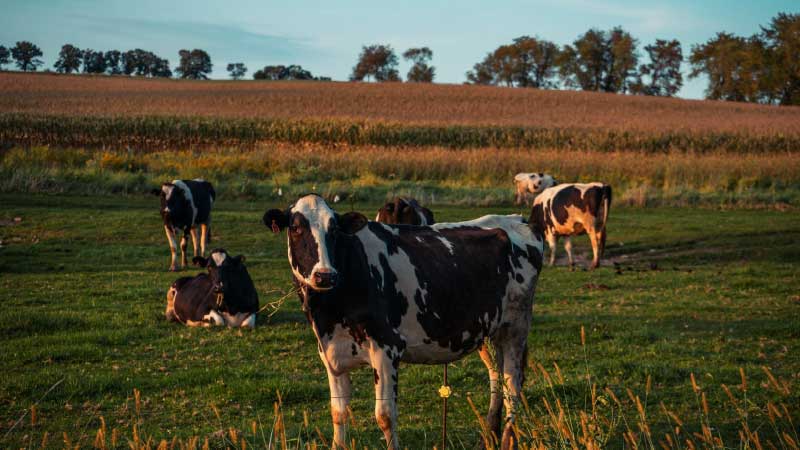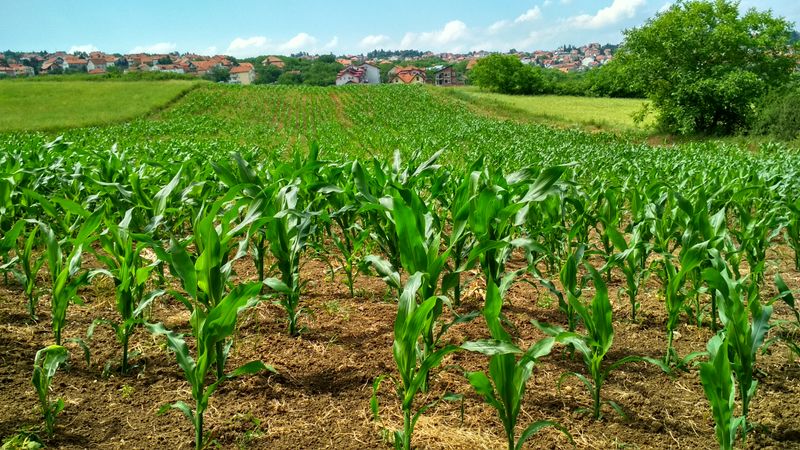
The most profitable farms in the world are not specialized — they are integrated. A specialized pig farm buys feed, raises pigs, sells pigs, and throws away the manure. An integrated farm grows maize to feed pigs, pig manure composts to fertilize vegetables, vegetable waste feeds poultry, poultry manure fertilizes the maize. Each "waste" of one enterprise becomes the input of another. Integration reduces input costs by 25-40%, creates multiple income streams, and builds soil fertility that compounds year after year.
The 5 integration loops
Loop 1: Maize → Pigs → Manure → Compost → Maize
Grow 1 hectare of maize (yield: 4 tons). Use it as the energy base for pig feed (saves buying commercial maize at 160 FCFA/kg, saving 640,000 FCFA). The 20 sows + growing piglets produce 60 tons of fresh manure per year. Composted (2:1 with sawdust), this yields 30 tons of compost worth 210,000 FCFA applied to the maize field — replacing commercial NPK fertilizer. Net annual value: 850,000 FCFA in feed savings + 210,000 in fertilizer savings = 1,060,000 FCFA.
Loop 2: Layers → Eggs + Cull hens → Pigs
Spent laying hens (culled at 16-18 months) are often sold at low prices (1,500 FCFA each) or thrown away. Instead, cook them with maize bran to create a high-protein pig feed supplement. 1,000 culled layers per year = 1,500 kg of pig feed at 12% protein, replacing purchased fish meal worth 1,200,000 FCFA. This eliminates the disposal problem and provides pigs with superior amino acids.
Loop 3: Pigs → Manure → Vegetables → Market
Use composted pig manure to fertilize a 0.5-hectare vegetable plot (tomatoes, peppers, cabbage). Without chemical fertilizer, yield is 15-25 tons per year, sold at 500-1,500 FCFA/kg. Revenue: 10-30 million FCFA. Profit margin on vegetables fertilized by free compost: 70-85%.
Loop 4: Vegetable waste + Crop residues → Poultry
Vegetable cultivation generates 30-40% waste (culls, outer leaves, stems). Feed these to poultry — layers love vegetable greens and accept them as 15-20% of their daily intake. For 1,000 layers, this saves 70-100 kg of purchased feed per month, or 200,000-300,000 FCFA per year.
Loop 5: Poultry manure → Fish pond → Vegetables
If you have space for a 200-500 m² fish pond, poultry manure (from 1,000 layers, ~3 tons per year) fertilizes the pond to produce plankton that feeds tilapia. Yields: 200-500 kg of fish per year, sold at 1,500-2,500 FCFA/kg = 300,000-1,250,000 FCFA. Pond water, rich in nutrients, irrigates vegetables.
Farm layout for integration
- Center: pig house + poultry house (within 50m of each other)
- North: manure composting area (downwind)
- Downhill from compost: vegetable plot
- Perimeter: maize field (1 ha)
- Lowest point: fish pond (if included)
- Near entrance: farm office, feed storage, processing
Water and drainage flow downhill — arrange enterprises so water from one naturally irrigates or fertilizes the next.
The 7 principles of integration design
- Waste is food. Every output of one enterprise should be designed as the input of another.
- Close the loops locally. The shorter the distance between waste production and consumption, the cheaper the system.
- Match enterprise scale. A 100-sow operation produces too much manure for a 0.5-hectare vegetable plot. Match sizes.
- Sequence by nutrient density. Highest-nutrient waste (pig/poultry manure) goes to the most demanding crop (vegetables). Lower-nutrient waste goes to maize/fodder.
- Diversify for risk management. If pig prices crash, vegetable and egg income sustain the farm.
- Plan labor holistically. Different enterprises have different peak labor periods — spread demand across the year.
- Document everything. Track each enterprise's revenue, costs, and inter-enterprise transfers.
Starting integration: the 12-month roadmap
Months 1-3: Audit current waste. Decide which 1-2 loops are easiest to start with.
Months 4-6: Build infrastructure for the first loop (composting area, vegetable plot, or feed mixing setup). Keep investment low (<500,000 FCFA).
Months 7-9: Operate the first loop, track results. If positive, expand to a second loop.
Months 10-12: Add a second loop. Plan the third for the next year. Full integration of 4-5 loops takes 2-3 years — that is normal.
FarmWise tracks each enterprise (pigs, poultry, crops, feed mill) as a separate cost center with its own P&L, but inter-enterprise transfers are recorded so you can see the true profitability of each loop.
FarmWise tracks all of this automatically for your farm.
Start free