The dream: keep your salary job, start a farm on the side, watch the extra income roll in. The reality: most side-business farms lose money in the first 2 years because the farmer underestimates the time, capital, and management required. But it CAN be profitable - if you choose the right enterprise, structure it correctly, and manage it as a business, not a hobby. Here is the honest breakdown.
Which Enterprises Work Best as Side Businesses?
The key constraint is TIME. If you work 8-5, you have maybe 2 hours per day for the farm (6-7 AM before work, and 6-7 PM after). Weekend time is for major tasks. This rules out intensive enterprises that require constant attention (like day-old chick brooding, which needs 24/7 temperature monitoring for the first 2 weeks).
Best side-business enterprises, ranked by time-efficiency:
- Pigs (fattening): Feed twice a day (morning + evening), clean once a week. A batch of 10 pigs takes 30 minutes per day. Buy weaned piglets at 8 weeks, sell at 6 months. Gross profit per batch: 200,000-400,000 FCFA (~$667).
- Layers (pullet rearing): Buy day-old chicks, rear to 18 weeks, sell as pullets. Daily tasks: 30 minutes for feeding + watering. No egg collection needed (they are not laying yet). Gross profit per batch of 100: 150,000-250,000 FCFA (~$417) in 18 weeks.
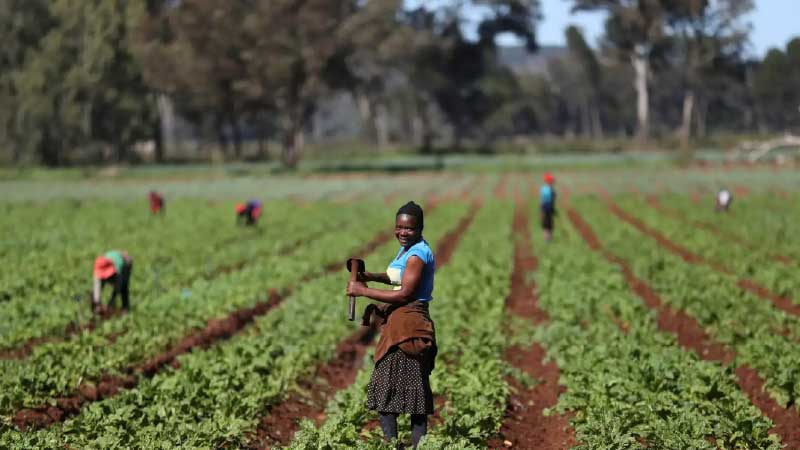
- Crops (seasonal): Maize, soybean, or vegetables. Labor-intensive at planting and harvest but low-maintenance in between. Requires land + hired labor for peak periods.
Enterprises to AVOID as side businesses: broilers (high mortality without daily monitoring), breeding pigs (farrowing can happen at any hour, requires 24/7 availability), dairy (twice-daily milking at fixed times, no exceptions), and free-range poultry (too vulnerable to theft and predators when you are not there).
The Honest Math: Can You Actually Profit?
Let us calculate a realistic scenario: 10 fattening pigs as a side business while working a full-time job in the city, with a farm worker handling daily tasks during the week.
Revenue: 10 pigs x 80kg x 1,800 FCFA (~$3.00)/kg = 1,440,000 FCFA (~$2400)
Costs: Piglets (10 x 15,000) = 150,000. Feed (10 x 250kg x 280 FCFA (~$0.47)) = 700,000. Worker (6 months x 25,000/month) = 150,000. Vet/meds = 20,000. Transport = 30,000. Total = 1,050,000 FCFA (~$1750).
Profit: 390,000 FCFA (~$650) in 6 months = 65,000 FCFA (~$108)/month.
Is that worth it? It depends. If your monthly salary is 150,000 FCFA (~$250), the farm adds 43% to your income. If your salary is 500,000 FCFA (~$833), it adds only 13%. The question is whether the 65,000 FCFA (~$108)/month justifies the risk (disease, price fluctuations, worker theft) and the capital investment (1,050,000 FCFA (~$83.3) upfront).
The 3 Rules for Side-Business Farming
Rule 1: Never rely on phone calls for management
"How are the pigs?" "Fine." This conversation is worthless. You need DATA, not opinions. Use FarmWise (or at least a notebook) to track daily feed consumption, mortality, and health events. A worker who knows you check the numbers is less likely to steal feed or skip tasks.
Rule 2: Hire a trustworthy worker and pay them well
A worker paid 15,000 FCFA (~$25.0)/month will steal 30,000 FCFA (~$50.0) worth of feed per month. A worker paid 30,000 FCFA (~$50.0)/month with a bonus of 5,000 FCFA (~$8.33) per pig sold will not steal and will work harder. The cheapest worker is the most expensive. Pay for trust.
Rule 3: Start small and scale only after profitability
Start with 10 pigs, not 50. If you cannot make 10 profitable, 50 will just multiply your losses. Only scale when you have 3 consecutive profitable batches. FarmWise tracks profitability per batch, so you know exactly when you are ready to expand.
Sources & References
- [1] Cameroon minimum wage (SMIG) agricultural: 45,000 FCFA/month; non-agricultural: 60,000 FCFA/month, per wageindicator.org, blessfuh.com, and Sage Cameroon statutory update Feb 2025. Source: https://wageindicator.org
- [2] Cameroon living income reference value (rural): 196,642 FCFA/month (~$328 USD), per globallivingwage.org — meaning side income is essential for most rural families. Source: https://www.globallivingwage.org
FarmWise tracks all of this automatically for your farm.
Start free